
My septic is failing and the permit takes 8 weeks — Indiana survival steps
You can't pause the household for two months. Here's the realistic bridge plan between failure and a permitted, installed new system.
Reading time: about 11 minutes · Updated May 21, 2026
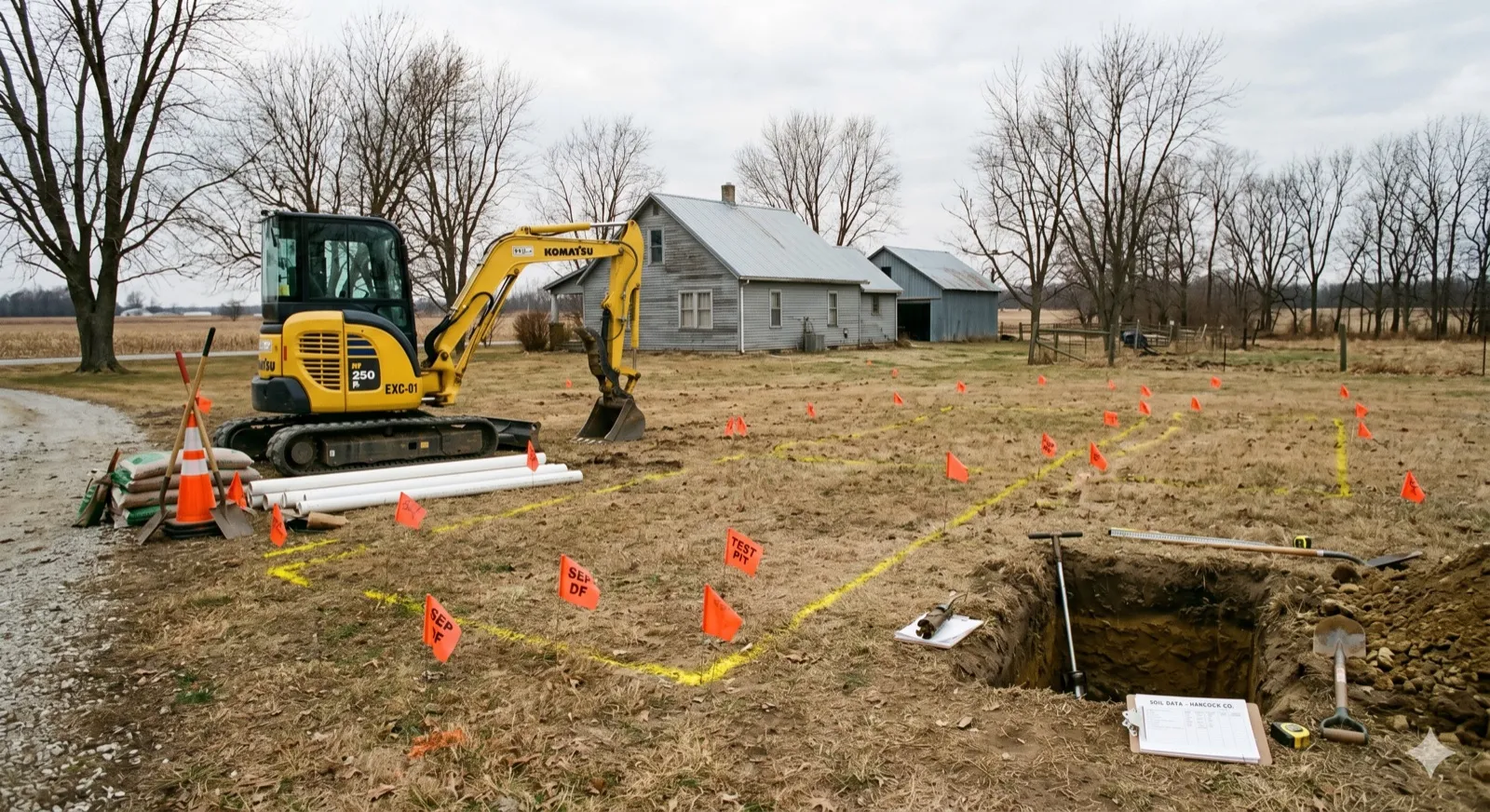
An Indiana septic system in active failure typically takes 6–10 weeks to get permitted and installed: about 2–4 weeks for the licensed soil scientist evaluation required under 410 IAC 6-8.3, 2–3 weeks for Hancock County Health Department permit review, and 2–3 weeks for installation scheduling and work. Interim survival is built around three levers: reducing household wastewater volume by 30–50% (cheap), contracted weekly tank pumping to keep the tank from overflowing ($400–$600/week), and emergency variance from the county for accelerated permitting when the situation meets the criteria. The sequence below is how to bridge the gap without flooding the basement or running afoul of code.
- Why the 6–10 week timeline is what it is
- Lever 1: reduce wastewater volume immediately
- Lever 2: contracted weekly pumping during the wait
- Lever 3: emergency variance from the county (when it applies)
- Parallelize aggressively to shave weeks
- What not to do during the bridge period
Why the timeline is what it is
Indiana's septic permitting timeline isn't bureaucratic obstruction — it's a sequence of dependent technical steps that each need real time. Understanding the dependencies helps you parallelize what can be parallelized and avoid wasting weeks.
Step 1 (week 1–2): Soil scientist scheduling. Indiana licenses soil scientists individually; the ones serving central Indiana have schedules that book out 1–2 weeks in advance. You can usually call and get on the schedule the day failure is confirmed. Cost: $350–$600.
Step 2 (week 2–4): Soil scientist site visit and report. The actual evaluation takes a few hours on site (test pits, percolation observations, water table check) plus 1–2 weeks to produce the written report that the county requires for permit submission. There's no useful way to compress this — the observations are time-bounded by soil and weather conditions.
Step 3 (week 3–5): System design. Once the soil scientist report is in, a licensed installer designs the system to match the soil findings — tank size, drainfield sizing, lateral count, distribution scheme. Submitted to the county with the permit application. This can run in parallel with step 2 (some designers start preliminary work from the soil scientist's draft observations).
Step 4 (week 5–7): County review. The Hancock County Health Department Environmental Health Division reviews the design against 410 IAC 6-8.3 standards. Standard turnaround is 2–3 weeks depending on workload. Expedited review is possible in emergency situations — see the variance section below.
Step 5 (week 7–9): Installation scheduling. Once permitted, the installer schedules excavation. Most central Indiana installers are 2–3 weeks out on installs during the busy season (April–October). Winter installs are faster on the schedule but limited by frozen ground.
Step 6 (week 9–10): Installation and inspection sign-off. Excavation, tank set, drainfield install, county inspection at multiple stages, final approval. The work itself runs 2–4 days for most residential systems; the inspection sign-off adds 3–5 days.
Lever 1 — Reduce wastewater volume immediately
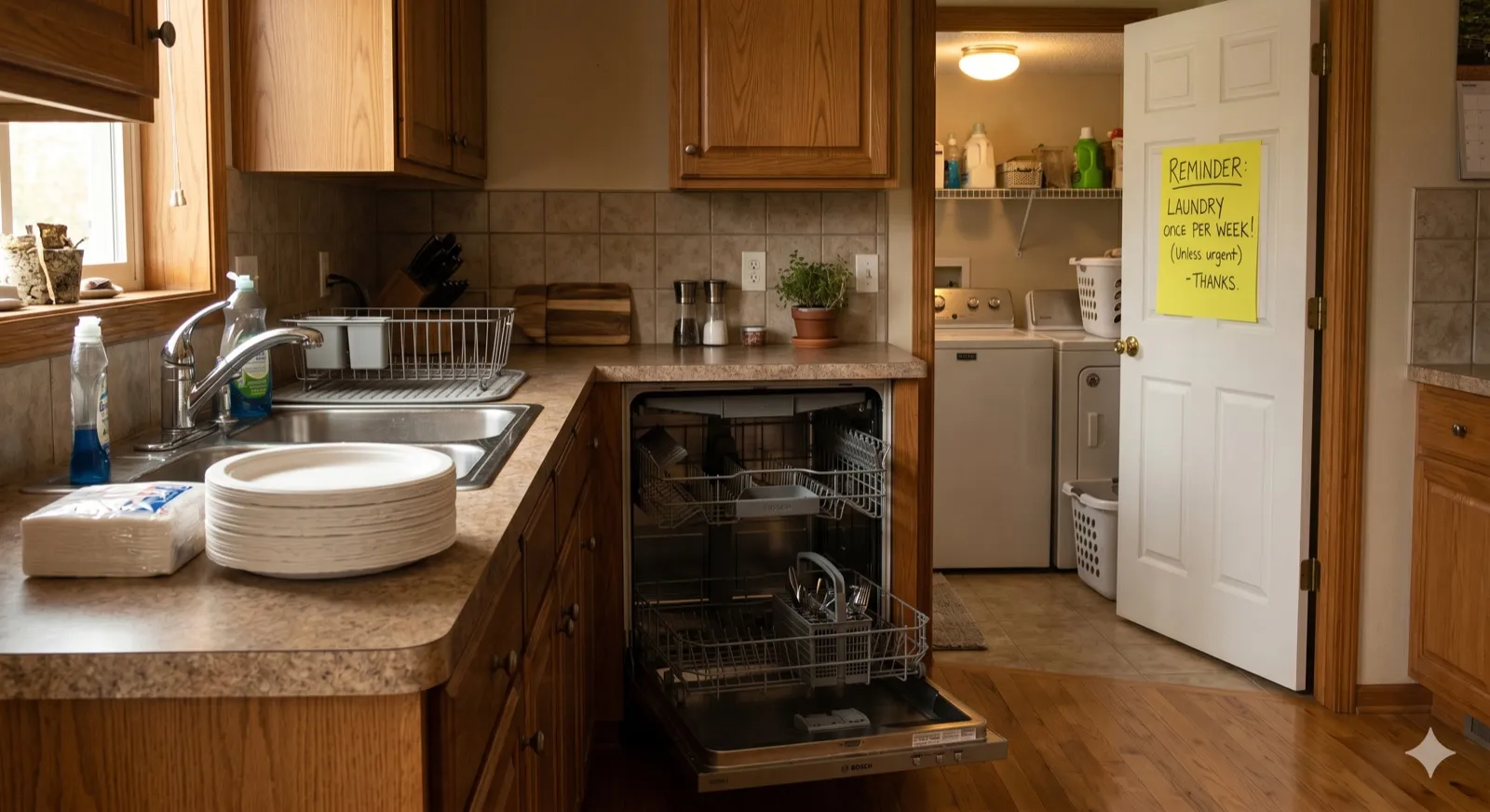
A failing drainfield can sometimes handle a reduced flow rate even when it can't handle normal household load. The single most impactful move during the bridge period is dropping daily wastewater output by 30–50% without leaving the house.
The list of concrete reductions:
- Fix every running toilet. A constantly-running flapper can double daily water use without anyone noticing. Five-dollar fix, 5-minute install. Walk every bathroom and confirm.
- Cut laundry to 50%. One load every other day instead of one a day. Wear clothes a second time. Use the laundromat for the heavier loads — every load you don't run is 30–40 gallons the field doesn't see.
- Shorter showers. A standard showerhead runs 2–2.5 gallons per minute. Cutting from 12 minutes to 6 minutes per shower saves 75 gallons a week for a family of four.
- Run the dishwasher only when full. Skip the rinse cycles.
- Turn off the icemaker. Modern automatic icemakers and water dispensers can use 5–10 gallons a day; not strictly necessary during a crisis.
- No outdoor watering. Irrigation systems sometimes route through household plumbing; turn them off entirely.
- Use disposable for the worst of it. Paper plates, takeout. Reduces dishwashing load substantially.
For a household of four, these together cut daily wastewater from ~250 gallons to ~120–150 gallons. That's often enough to keep a marginal field from surfacing during the bridge period.
Lever 2 — Contracted weekly pumping (or staying ahead of overflow)
When the drainfield isn't accepting effluent at all, the tank fills to the inlet level and household drains stop. The bridge is to have the tank pumped frequently enough that the level stays below the inlet.
The math: a 1,000-gallon tank serving four people at full normal load fills the effluent space in about 4–6 days if no liquid is leaving via the field. Reduced household load extends that to 7–10 days. Most local Hancock County operators will run a weekly pump contract for $400–$600 per visit during emergency situations. Total bridge cost: $3,000–$5,000 over the 6–10 week wait. Not fun, but workable.
Two things to coordinate:
- Pumping cadence. Track the indoor symptom (slow drains) versus pumping schedule for the first two weeks; adjust frequency from there. Pumping the day before symptoms reappear is the goal.
- Disposal site logistics. Pumpers in central Indiana dispose at licensed facilities; the haulers cover this, but the cost is built into the weekly rate. Weekly pumping isn't cheap because the disposal volume adds up.
A note: continuous over-pumping is not a long-term solution. The point of bridging is to keep the household functional during the permit-and-install timeline, not to defer the project. Operators who suggest indefinite pumping in lieu of permitted replacement are working outside the spirit of the code, and the Hancock County Health Department will eventually flag the situation.
Lever 3 — Emergency variance from the county
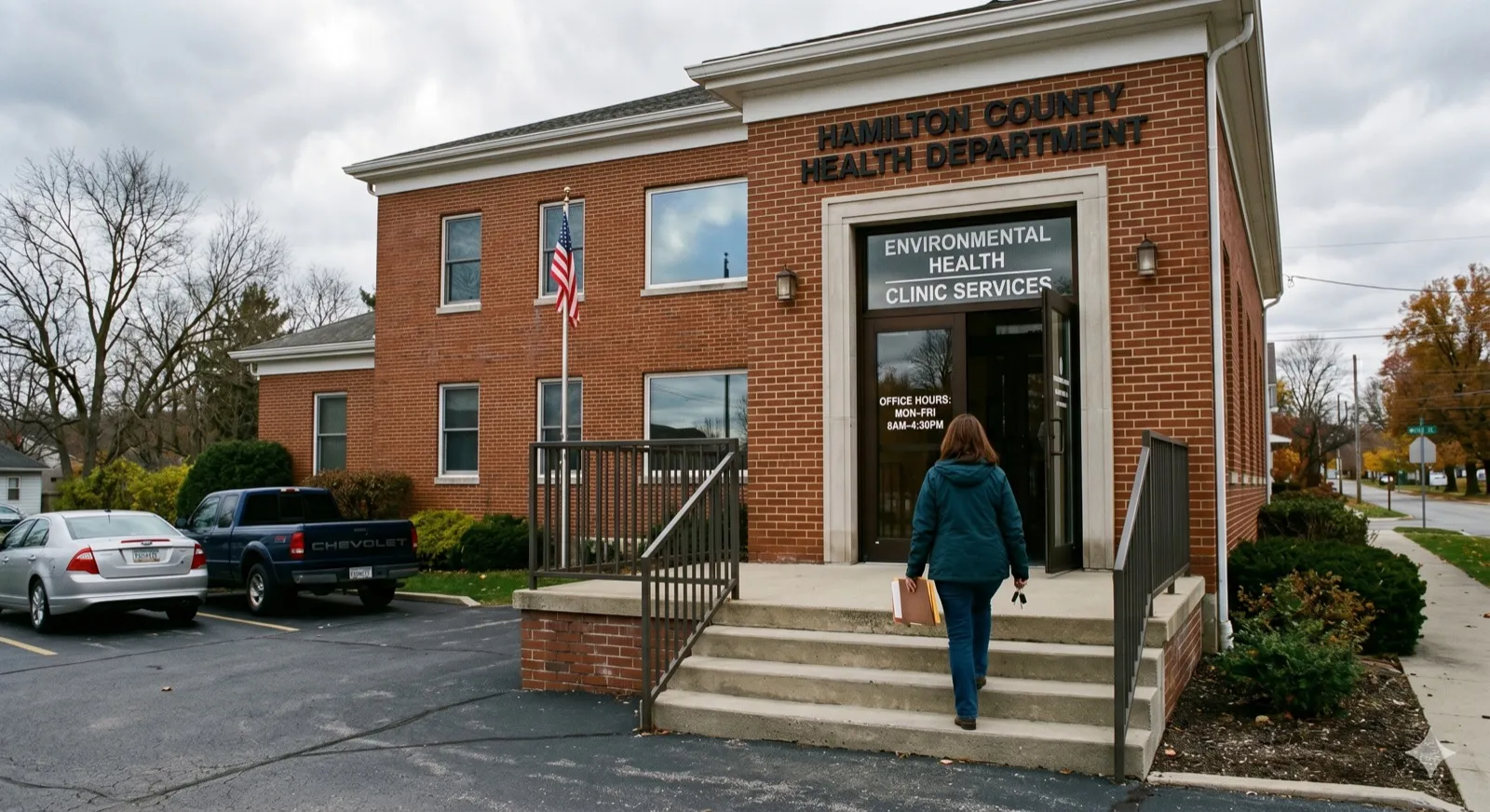
Hancock County will, in genuine emergency situations, expedite permit review or issue a variance allowing accelerated work. This isn't automatic — it requires a specific demonstration of emergency conditions, and abuse of the process makes it harder for future cases.
What qualifies (generally):
- Confirmed effluent surfacing creating a public health concern
- Drinking water contamination risk from a failing system near a well
- Habitability issues — sewage backing into the house consistently despite mitigation
- Medically necessary water use that can't be reduced (dialysis, certain disabilities)
- School-aged children in the household when other mitigation hasn't held
What doesn't qualify:
- Inconvenience or aesthetic concerns
- Real estate transaction timing
- Failure to pursue mitigation first
- Vacation home or seasonal property situations
The process: contact the Hancock County Health Department directly at (317) 477-1127 and request an emergency review. Be specific about what's happening, what mitigation has been tried, and why the situation can't wait for standard review. Bring photographs and any documentation. The Environmental Health Division will schedule a site visit, evaluate the situation, and either issue an expedited permit (shaving 1–4 weeks off the timeline) or coordinate an interim variance allowing temporary measures.
Variances don't usually compress the soil scientist or installer steps — those are technical constraints, not bureaucratic ones. What they do is move the county-review step from "queue order" to "front of line."
Parallelize aggressively
The default Indiana timeline is sequential; the survival timeline is parallel. Steps you can run simultaneously to shave weeks:
- Soil scientist + designer engagement on day one. Don't wait for the soil scientist report to start the design conversation. Designers can begin preliminary sizing from soil scientist field observations even before the formal report.
- Permit application drafting in parallel. The application can be assembled and partially filled out while the soil scientist report is being written. Submitted as soon as the report lands.
- Installer scheduling during permit review. Get on the installer's calendar before the permit is approved. Most installers will provisionally schedule contingent on permit approval; if the permit comes in faster, the install slot is held.
- Material orders pre-positioned. Tank, gravel, lateral pipe, distribution box — installers can have materials staged so installation starts the day after permit approval.
With aggressive parallelization the realistic Indiana timeline compresses from 8–10 weeks to 5–7. Whether the savings justify the extra coordination depends on how rough the bridge period is.
What not to do
- Don't start excavation without a permit. Indiana law under 410 IAC 6-8.3 requires the permit be issued before any tank or field work begins. The Hancock County Health Department will not retroactively permit an installation; the work has to be re-done with proper inspection, which means double the cost.
- Don't sign with an operator promising "we'll handle the permit later." They can't legally start, and a quote that depends on shortcutting the code is a quote you'll regret. See the upsell-scams guide.
- Don't pour anything into the system to "fix" the field. No additive products restore a failed drainfield. Anything sold for that purpose either does nothing or actively damages the soil column further.
- Don't divert effluent to a graywater pit, French drain, or surface discharge. Illegal under Indiana code. Even temporarily. The disclosure obligation alone makes this a non-starter — and the public health implications are real.
- Don't ignore the household impact. Children, elderly residents, and anyone with health vulnerabilities should not be in a home with active sewage backups. If the bridge period gets rough, alternative housing arrangements may be necessary — uncomfortable but the right call.
Failing system in Hancock County?
Call (317) 836-2464. We coordinate soil scientist, designer, county permit process, and installation end to end — and we run weekly bridge pumping during the wait. Mon–Sat, 7 a.m.–6 p.m.
Related: sewage in your yard diagnostic · spotting upsell scams · full Hancock County septic guide